How Finances Are Affecting Mental Health And Employee Wellbeing
Back to News & insights
Last updated: 19 October 2026
Money worries can affect your mental health in very real ways: anxiety, poor sleep, shame and avoiding post or bills. In Lifetime’s 2025 survey of 1,000 UK adults, more than half said their finances negatively affect their mental health. If that sounds familiar, you’re not alone, and free, confidential help is available.
Money worries aren’t just about numbers in a bank account; they’re shaping how we sleep, how we feel, and even how we perform at work.
How do money worries affect your mental health?
According to research from our 2025 financial wellbeing survey, more than half of UK adults say their finances negatively affect their mental health. For more than 1 in 3 people, it happens very often or all the time.
Money and mental health can feed each other. Mental health charity Mind describes how money problems can affect your mental health, and how poor mental health can make it harder to manage money, which can become a vicious cycle.
You might notice:
- worrying about money late at night, or struggling to sleep;
- feeling anxious, ashamed or embarrassed about your situation;
- avoiding opening letters, checking your bank balance or answering calls;
- finding it harder to concentrate at work;
- tension in your relationships when money comes up.
Who is feeling the pressure the most?
Our survey of 1,000 UK adults reveals stark differences across age, gender and region:
- Generation Z are 3x more likely than Baby Boomers to say money worries affect them constantly.
- Londoners and the North East report the highest strain, with over 1 in 5 in the North East feeling the impact all the time, and a third of Londoners struggling very often.
- Women and younger people are disproportionately affected, reporting higher levels of anxiety, shame and poor sleep linked to money concerns.
When asked how they feel about their finances, nearly half of Gen Z used the word anxious. Women were more likely than men to describe feeling ashamed. Almost half of women said money worries had disrupted their sleep.
This isn’t just an economic problem; it’s a financial wellbeing issue with ripple effects across relationships, health, and productivity at work.
Why is it so hard to ask for help with money?
Our survey found that nearly half of Gen Z avoid seeking personal financial services because they feel embarrassed or don’t know where to start. Confidence is especially low among younger generations and women, leaving many people to struggle alone.
Keerti Baker, Our Marketing Director, explains:
“The cost-of-living is no longer just an economic headline. It’s becoming a public health issue. Money touches everything: our self-worth, our relationships, and our stress levels, both in and out of work. If we want to build a healthier, more productive workforce, employers and policy makers need to treat the financial wellbeing of employees as a core part of emotional wellbeing.”
Talking about money can feel uncomfortable, but it’s often the first step. Our guide on why talking about money is key in relationships has some ideas for starting the conversation at home.
What can I do if money worries are affecting my mental health?
Small steps can help you feel more in control:
- Write down what’s worrying you. Seeing it on paper can make it feel more manageable.
- Get a clear picture of your money. List what comes in and what goes out each month, and which bills are priorities, such as rent or mortgage, council tax and energy. Your home may be repossessed if you do not keep up repayments on your mortgage.
- Open the post and check your balance. It can feel hard, but knowing where you stand usually feels better than not knowing.
- Talk to someone. That could be a friend, family member, your GP or a free advice service.
- Check what support your employer offers. Many workplaces offer financial wellbeing benefits, coaching or an employee assistance programme.
- Get debt advice early. If you’re behind on bills, free debt advice can help you find a way forward.
Where can I get free help?
Free, confidential support is available:
- StepChange, the debt charity, on 0800 138 1111 (freephone).
- Citizens Advice for help with debt, bills and benefits.
- MoneyHelper, backed by government, for free and impartial money guidance.
- Mind for information about money and mental health.
- Samaritans on 116 123, free, any time of day or night, if you’re struggling to cope.
How can my employer help?
Stress and anxiety around money don’t stop at the office door or clock out at 5 pm. They affect productivity, engagement, and overall workplace culture.
Employers can play a critical role in breaking down these barriers by:
- Offering financial education, coaching and tools through platforms like the Lifetime app or other Lifetime financial planning services.
- Creating a culture where conversations about money are normalised and stigma-free.
- Providing accessible, personalised support that empowers employees to take control of their finances and plan for the future, including later life financial planning.
If you work in HR or lead a team, our guide to mental health at work and financial wellbeing sets out practical steps for employers.
Frequently asked questions
Can money worries cause anxiety?
Yes. In our 2025 survey, nearly half of Gen Z used the word “anxious” to describe how they feel about their finances. Mind explains that money problems and mental health can affect each other.
Who is most affected by money worries?
In our survey, younger people and women were disproportionately affected, and Gen Z were 3x more likely than Baby Boomers to say money worries affect them constantly.
Where can I get free debt advice?
StepChange, Citizens Advice and MoneyHelper all offer free, confidential help.
What should I do if I’m struggling to cope?
Talk to someone you trust. Samaritans are available free on 116 123, day or night, from any phone.
Supporting financial wellbeing for everyone
Financial wellbeing is a key part of overall health and resilience. For individuals, taking steps early, whether exploring pension advice, accessing personal financial services, or using tools and resources, can help reduce stress and build long-term confidence.
For HR and business leaders, embedding financial wellbeing of employees into workplace strategies isn’t just a “nice to have.” Supporting staff with accessible guidance, education, and resources strengthens engagement, reduces stress, and fosters a healthier, more resilient workforce.
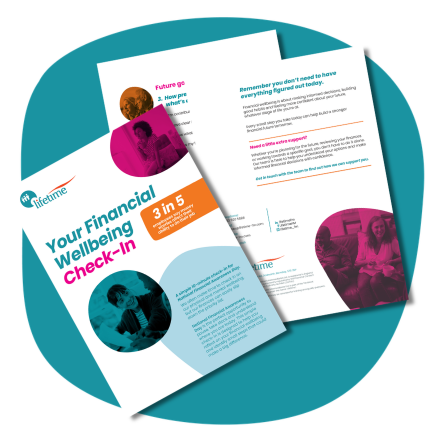
A glimpse into this insight is available here.
Written by Ione Morton, Marketing Executive at Lifetime
This article is general information, not personal financial advice. Lifetime is authorised and regulated by the Financial Conduct Authority (FRN 225795).