Changing Careers at 40: It’s never too late to change careers or start something new
Back to News & insights
Last updated: 22 October 2026
It’s never too late to change careers at 40, but it pays to plan the money side first. Work out what you need each month, build a cash buffer for any drop in income, check what happens to your pension, and look at free retraining and careers support before you hand in your notice.
Many people are choosing to change direction, whether that’s changing careers at 40, learning new skills or starting a business later in life. Read about why life’s path is no longer linear and how financial confidence and planning can help you take your next step.
Is it too late to change careers at 40?
There was a time when life followed a predictable path. You finished education, started to build your career, settled into a long-term job and eventually reached retirement.
Today, that picture looks very different.
For many people, that now means changing careers in their 40s and 50s, returning to education later in life, launching businesses after decades in employment and redefining what retirement looks like. Rather than following one fixed path, many of us are embracing multiple chapters throughout our lives.
Learning doesn’t stop at school, either. According to the Learning and Work Institute’s Adult Participation in Learning Survey 2025, 42% of UK adults have taken part in learning within the last three years.
Why are more people changing careers at 40 or later?
One of the biggest shifts we’ve seen is the number of people changing careers at 40 or later. What was once viewed as unusual has become increasingly common, with many people choosing to retrain, pursue long-held ambitions or find work that better reflects the life they want today.
For some, that means retraining for a completely new career. For others, it’s starting a side business they’ve always dreamed about, reducing working hours to create a better work-life balance, or planning for an earlier retirement.
These decisions aren’t just about having ambition; they’re about creating a life that better reflects what matters today.
What financial questions should you ask before changing careers?
If you’re considering changing careers at 40, those financial questions can feel even more significant. You may have a mortgage, family commitments or retirement plans to consider, making financial confidence more important than ever.
Questions like:
- Can I afford to earn less while I retrain?
- What would happen to my pension if I changed careers?
- Is now the right time to start my own business?
- Could I reduce my hours without affecting my long-term plans?
- Am I financially ready to make this change?
These questions often become the biggest barrier, not because the dream isn’t achievable, but because people don’t know where to start.
Having a clear understanding of your financial position can give you the confidence to make decisions based on facts rather than assumptions.
How do I prepare my finances for a career change at 40?
- Know your numbers. List what comes in and what goes out each month, and mark the priority bills, such as your rent or mortgage, council tax and energy. Your home may be repossessed if you do not keep up repayments on your mortgage.
- Budget for a pay cut. If your new path pays less at first, try living on the lower income for a few months before you switch, and save the difference.
- Build a cash buffer. Aim to have enough in easy-access savings to cover your essential bills for the time you’ll be retraining or building up a new business.
- Check what happens to your pension. See the next section for what changes when you switch jobs or become self-employed.
- Look for free or funded training. You may not need to pay for everything yourself (see “What free retraining and careers support is available?” below).
- Plan for tax if you go it alone. If you start working for yourself, GOV.UK explains that you may need to report your income to HMRC. If you need to send a tax return, you must register for Self Assessment by 5 October after the end of the tax year it covers, or you could get a penalty.
- Talk it through. A conversation with someone who can look at your whole picture can help you spot gaps before you make the move.
What happens to my pension if I change careers?
Your workplace pension still belongs to you when you change jobs. If you stop paying in, the money stays invested and you’ll get a pension when you reach the scheme’s pension age. You may be able to keep paying into your old pension or combine it with a new one, so ask your pension providers about your options.
If you move to a new employer, they must automatically enrol you into a workplace pension if you’re aged between 22 and State Pension age and earn at least £10,000 a year, among other conditions. Under automatic enrolment, the minimum total contribution is 8% of your earnings, with at least 3% from your employer. In most schemes, this is worked out on earnings between £6,240 and £50,270 a year before tax.
If you become self-employed, there’s no employer paying in. GOV.UK says you may be able to keep contributing to your workplace pension, use the National Employment Savings Trust (NEST), or set up a personal or stakeholder pension.
Two quick checks are worth doing before you move:
- Find old pensions. If you’ve lost track of a pension from a past job, the Find pension contact details service can help you find the scheme’s contact details.
- Check your State Pension record. Your National Insurance record shows any gaps that mean some years do not count towards your State Pension, and whether paying voluntary contributions could help.
The value of your pension can fall as well as rise. If you’d like help understanding your pensions before a career change, find out more about our pension services.
What free retraining and careers support is available?
- Skills Bootcamps. The government’s Skills for Careers service lists free Skills Bootcamps for people aged 19 or over, in areas such as digital, construction, green skills, health and social care and HGV driving. They take up to 16 weeks and come with a guaranteed job interview at the end.
- Free careers advice. The National Careers Service says that if you’re 18 or older and live in England, you can contact a DWP careers adviser on 0800 072 0288, 8am to 6pm, Monday to Friday.
- Funding for degree-level study. If your home is in England and your course starts on or after 1 January 2027, student finance for many level 4 to 6 courses works through the new Lifelong Learning Entitlement, with Tuition Fee Loans of up to £39,160 depending on how much previous study you’ve done. Loans have to be paid back once you earn over a certain amount.
If your career change isn’t by choice, our guide to facing redundancy explains the support available.
Planning for your next chapter
Financial planning isn’t about predicting every twist and turn life will take. It’s about giving yourself more options.
When you understand where you stand financially, you’re better equipped to make informed decisions about the future, whether that’s pursuing a new qualification, changing career, launching a business or simply creating more flexibility in your life.
Your next move doesn’t have to be rushed and it doesn’t have to follow anyone else’s timeline.
Frequently asked questions
Is 40 too late to change careers?
No. Many people retrain, change direction or start a business in their 40s and beyond. Planning the money side first can make the move feel less risky.
Will I lose my pension if I change jobs?
No. Your workplace pension still belongs to you. If you stop paying in, it stays invested until the scheme’s pension age, and you may be able to combine it with a new pension.
Are there free courses for adults who want to retrain?
Yes. Free Skills Bootcamps are open to people aged 19 or over, last up to 16 weeks and come with a guaranteed job interview at the end.
Where can I get free careers advice?
If you’re 18 or older and live in England, you can speak to a DWP careers adviser on 0800 072 0288, as listed by the National Careers Service.
Ready to see what’s next?
Whether you’re changing careers at 40, starting a business at 50 or simply exploring what comes next, understanding your finances can help you move forward with greater confidence.
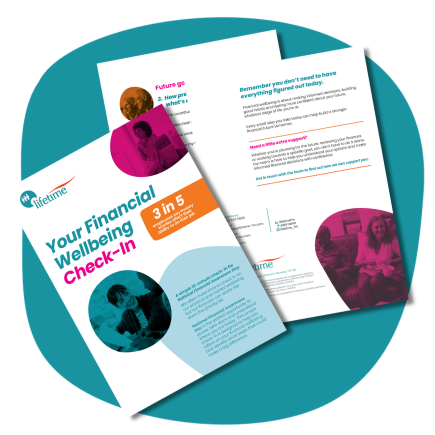
Inside our guide, you’ll find practical guidance, thought-provoking questions and insights to help you reflect on your goals and understand the financial considerations behind life’s changing moments.
Because your future doesn’t have to follow a straight line and with the right planning, your next chapter could be your most rewarding yet.
If you’d like to talk through your plans or explore your options in more detail, our team is here to help. Get in touch for a friendly, no-obligation conversation about your next move.
Written by Ione Morton, Marketing Executive
This article is general information, not personal financial advice. Lifetime is authorised and regulated by the Financial Conduct Authority (FRN 225795).