Financial Wellbeing Needs a Place in Your 2027 Plan
Back to News & insights
Last updated: 12 October 2026
Financial wellbeing belongs in your 2027 plan because it works best as a steady, year-round programme rather than a one-off campaign. Build it around a written financial wellbeing policy, key dates such as Financial Wellbeing Month in April and Talk Money Week in November, and support your people can reach when money is already on their minds.
Every January, the phrase “new year, new me” resurfaces, and with it, a renewed focus on financial wellbeing. Employees come into the year wanting to feel more in control, make better decisions, and start with confidence, particularly when it comes to money.
For HR teams setting 2027 budgets and benefits plans, this moment creates an opportunity. Not to push resolutions or quick fixes, but to build financial wellbeing at work into the year ahead in a way that feels practical, supportive, and sustainable.
Why should financial wellbeing be part of your 2027 plan?
Because it has moved beyond crisis support. Planned in advance, it helps people feel capable and informed before stress builds up, rather than stepping in once problems become visible.
Financial wellbeing used to be treated as something reactive. Today, it’s different. Employees are navigating everyday financial decisions in a far more complex environment, from rising costs and changing savings habits to constant financial “advice” online. What many people lack isn’t motivation, but clarity and confidence.
Employers are moving the same way. The CIPD’s Health and wellbeing at work 2025 report, a survey of 1,101 HR professionals and senior managers, found that the share of organisations with a stand-alone wellbeing strategy has risen from 44% in 2020 to 57% in 2025. The same report found average sickness absence had reached 9.4 days per employee per year.
Why isn’t a one-off campaign enough?
One-off initiatives rarely shift behaviour. What works better is a planned, consistent approach that meets people where they are, at the moments when money is already on their minds.
The challenge for HR isn’t recognising the need, it’s delivering support in a way that feels:
- Relevant
- Normalised
- Easy to engage with
The CIPD found that over a third (37%) of respondents still describe their organisation as much more reactive (taking action when people have gone off sick) than proactive. A plan is how you move from one to the other. That’s how “new year, better me” becomes something more meaningful at work: not a slogan, but a structure that supports progress over time.
When is Financial Wellbeing Month?
Financial Wellbeing Month runs in April. It is a free workplace campaign, hosted by FinWELL Training and run in partnership with Mental Health First Aid England, Ripple for Business and the Ripple Suicide Prevention Charity, linking financial wellbeing, mental health and suicide prevention. The 2026 campaign ran through April. Check the organisers’ website for confirmed 2027 dates before you finalise your plan.
Financial Wellbeing Month is one of several moments that fit a year-round plan:
- January: new year money reset, when “new year, better me” is front of mind.
- April: Financial Wellbeing Month, which shares the month with Stress Awareness Month. Our article on why financial wellbeing matters during Stress Awareness Month explains the link.
- Financial Awareness Day: a good prompt for confidence-building sessions. See building financial confidence starts with understanding your money.
What should a financial wellbeing policy include?
A financial wellbeing policy sets out why your organisation supports employees with money, what support is on offer, how people can reach it in confidence, and how you will measure progress.
A practical policy usually covers:
- Purpose and scope. Why financial wellbeing matters to the organisation, and who the policy covers.
- Roles and responsibilities. The CIPD recommends that wellbeing plans set out the responsibilities of different groups, including a senior sponsor, HR, managers and employees.
- The support on offer. For example, financial education, one-to-one coaching, an app, pension information and any hardship support. In the CIPD’s 2025 survey, 43% of organisations offered financial education and support to all employees.
- Confidentiality. A clear promise about how personal money conversations are kept private, so people feel safe asking for help.
- Manager guidance. How line managers can spot signs of money worries, start a conversation and refer people on, without acting as advisers.
- Signposting to free help. MoneyHelper, backed by government, offers free and impartial money guidance, including debt advice.
- An annual calendar. The key dates and seasonal pressures you will plan activity around.
- Measurement and review. A short, anonymous check on how secure and in control staff feel, repeated each year, plus a set date to review the policy.
How do you plan financial wellbeing across the year?
Financial wellbeing works best when it’s part of the natural rhythm of the year. Linking support to key awareness moments and seasonal pressures helps HR teams:
- Start conversations without forcing them
- Avoid reactive, last-minute initiatives
- Build confidence gradually through small, timely actions
This approach turns financial wellbeing into an ongoing conversation, rather than a one-off campaign.
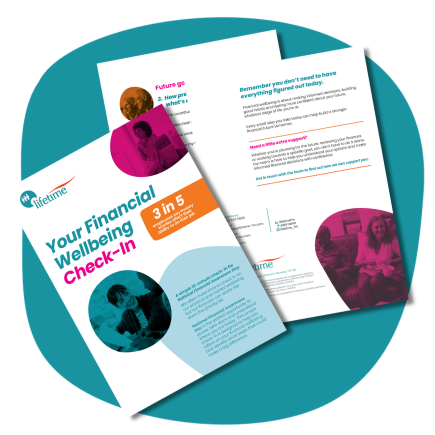
Our UK Financial Wellbeing Calendar was designed to help HR teams move from good intentions to real action. It provides:
- Key financial and wellbeing awareness dates across the year
- Simple, ready-to-use ideas for engagement
- Easy ways to normalise conversations about money at work
With a clear plan in place, financial wellbeing becomes manageable, consistent, and far easier to embed into your HR strategy.
How can you make financial wellbeing accessible to every employee?
Offer support in more than one format, so people can use it privately and at the moment they need it.
At Lifetime, we believe that with the right support, people can feel more confident with their money and take positive steps toward their financial goals. We do this through coaching and jargon-free videos, webinars, and articles, all available via the Lifetime Financial Wellbeing App and Employee Hub, making financial wellbeing accessible, practical, and relevant for today’s workforce. If you are building your team’s skills too, our guide to building confidence around financial wellbeing at work is a useful starting point.
Frequently asked questions
When is Financial Wellbeing Month 2027?
Financial Wellbeing Month takes place in April. It is a free campaign for workplaces, hosted by FinWELL Training with partners including Mental Health First Aid England. Check the organisers’ website for confirmed 2027 events, then build your April activity around it alongside Stress Awareness Month.
What is a financial wellbeing policy?
It is a short document that explains how an organisation supports employees with money. It covers the purpose, the support on offer, confidentiality, the role of managers, signposting to free guidance such as MoneyHelper, key dates in the year, and how the organisation will measure and review progress.
Do we need a separate financial wellbeing policy?
Not necessarily. Many employers include financial wellbeing within a wider wellbeing strategy. What matters is that the support is written down, funded, communicated and reviewed. A stand-alone policy can help if money worries are a clear theme in your staff surveys or absence data.
How much should we budget for financial wellbeing in 2027?
It depends on your size, your people’s needs and what you already offer, such as an employee assistance programme. Start with what staff tell you they need, map it to the year’s key dates, and review results after twelve months.
How do we measure whether financial wellbeing support is working?
Use a short, anonymous survey that asks how secure and in control people feel about their money, and repeat it each year. Alongside it, track take-up of coaching, app use and event attendance, and look at trends in absence and staff feedback.
Planning for a better 2027
“New year, better me” doesn’t have to fade by February. With the right structure, small actions, and consistent support, HR teams can help turn that intention into lasting confidence, for individuals and organisations alike.
Download our UK Financial Wellbeing Calendar and start building financial wellbeing into your year. If you would like to talk through a plan for your team, book a demo.
For free, impartial money guidance, employees can also visit MoneyHelper.