Mental Health Awareness Week: Support Your Team
Back to News & insights
Last updated: 22 October 2026
Managers can support their team’s mental health by checking in regularly, noticing changes early, listening without judgement, easing work pressure where they can and pointing people to support, including help with money worries. Mental Health Awareness Week, held every May, is a good moment to start, but these habits matter all year round.
When is Mental Health Awareness Week?
The Mental Health Foundation leads Mental Health Awareness Week every May. In 2026 it ran from 11 to 17 May, on the theme of “Action”, and the next one is from 10 to 16 May 2027.
At Lifetime, we’re passionate about advocating for better mental health, something we know is strongly tied to better financial health.
Why do money worries matter for your team’s mental health?
We know the rising cost of living is putting real pressure on employees. From energy bills to food and housing costs, financial strain can become a daily stressor. For people already experiencing mental health problems, the impact can be even more severe.
According to the Money and Mental Health Policy Institute, people experiencing mental health problems are three and a half times more likely to be in problem debt than people without them. The Institute also reports that:
- 72% of respondents to its survey said their mental health problems had made their financial situation worse.
- People with common mental disorders are twice as likely to report being behind on council tax.
On the flip side, financial difficulty is a major contributor to poor mental wellbeing. Worrying about money can lead to sleepless nights, heightened anxiety, and even depression.
If you’d like to understand how this feels from an employee’s point of view, read how finances are affecting mental health and employee wellbeing.
Why does the role of managers matter?
Managers and HR leaders aren’t expected to solve every individual’s challenge, but the workplace plays a huge part in people’s mental and financial wellbeing. Employers are in a unique position to break the cycle by creating an environment where people feel supported, not judged.
Line managers are often the first to notice when something has changed, but many people find it hard to speak up:
- Over one in three (35%) workers said they did not feel comfortable discussing high or extreme levels of stress with a manager, in Mental Health UK’s Burnout Report 2026.
- In the same survey, almost one in three (29%) said their employer raises awareness about mental health but managers lack the time, training and resources to provide meaningful support.
- The Health and Safety Executive reports that workload pressures and a lack of managerial support were the main work factors cited as causing work-related stress, depression or anxiety.
How can managers support their team’s mental health?
Here are a few practical ways to start:
- Reduce the stigma. Foster a culture of openness. Create safe spaces where people can talk about money and mental health without shame or embarrassment. Mental health first aiders, internal campaigns, and visible leadership support go a long way.
- Check in regularly. Use one-to-ones to ask how people are, not just what they are working on. The HSE’s Stress Talking Toolkits are designed to help managers start these conversations and find the causes of stress.
- Watch out for changes. Signs such as disengagement or presenteeism may signal someone is struggling silently. The HSE lists signs of stress that include taking more time off, arriving for work later, mood swings, being withdrawn and losing motivation or confidence. In a team, look out for more arguments, more sickness absence and lower performance.
- Address work-related stress. Tight deadlines, unclear expectations, or a lack of flexibility can worsen financial anxiety. Regular check-ins, realistic workloads, and autonomy can help ease the pressure.
- Provide meaningful support and tools. One-size-fits-all wellbeing benefits don’t cut it. People need tailored financial guidance that matches their situation, not generic tips or isolated perks. Whether it’s access to confidential 1:1 financial guidance or financial education workshops, these resources matter.
- Prioritise social inclusion. Financial difficulty can lead to social withdrawal and exclusion. Inclusive workplaces make sure no one is left out, for example by making work events accessible regardless of someone’s budget or personal circumstances.
What should a manager say if someone mentions money worries?
You don’t need to be a money expert. Your role is to listen and help the person find the right support:
- Find a private moment. Choose a quiet time and place, and let them know the conversation is confidential within your organisation’s policies.
- Listen without judgement. Thank them for telling you. Money can feel very personal, so avoid assumptions about how they got there.
- Don’t give financial advice. Point them to the support your organisation offers, such as an employee assistance programme or a financial wellbeing benefit, and to free, impartial services.
- Ask what would help at work. A short-term change to workload or hours, or time to attend an appointment, can make a difference.
- Agree when you’ll check in again. A follow-up shows the conversation mattered.
If you’re worried about someone’s health, the HSE suggests managers encourage them to see their GP. If someone tells you they are struggling to cope, make sure they know about Samaritans (details below).
What can you do this Mental Health Awareness Week?
The week is a useful prompt, but the aim is support that lasts all year:
- Remind your team, in plain words, what support is available and how to access it confidentially.
- Hold a team check-in on workload and wellbeing, using the HSE talking toolkit as a guide.
- Share free sources of help, including the list below.
- Build your own confidence: our free Understanding Financial Wellbeing course is CPD-accredited and designed for HR and people leaders.
- Put a date in the diary to review what you’ve done, so the conversation doesn’t stop when the week ends.
For the wider strategy and business case for HR teams, see our guide to mental health at work and financial wellbeing. For the particular pressures many men face, read why men’s mental health matters.
Where can employees get free help?
- StepChange, the debt charity, on 0800 138 1111 (freephone).
- Citizens Advice for help with debt, bills and benefits.
- MoneyHelper, backed by government, for free and impartial money guidance.
- Mind for information about money and mental health.
- Samaritans on 116 123, free, any time of day or night, if you’re struggling to cope.
Frequently asked questions
When is Mental Health Awareness Week?
Every May. In 2026 it ran from 11 to 17 May, and the Mental Health Foundation has announced 10 to 16 May 2027 for next year.
How can a manager support someone with money worries?
Listen without judgement, avoid giving financial advice, point them to workplace benefits and free services such as StepChange and Citizens Advice, and agree when you’ll check in again.
What are the signs that someone in my team is stressed?
The HSE lists signs such as taking more time off, arriving later, mood swings, being withdrawn and losing motivation or confidence.
What should I do if a colleague is struggling to cope?
Encourage them to talk to someone they trust and to see their GP. Samaritans are available free on 116 123, day or night, from any phone.
Better mental health starts with better financial wellbeing
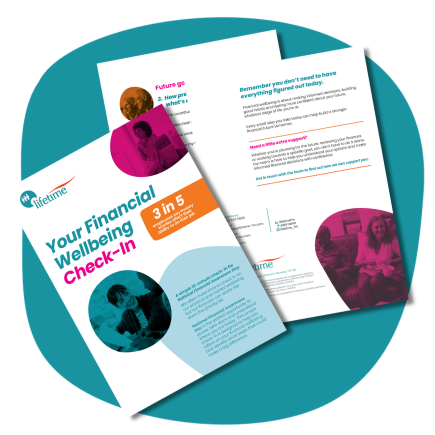
At Lifetime, we believe that better mental health often begins with better financial wellbeing. Our financial wellbeing benefit is helping employees understand, manage, and take control of their finances. Together, we can break the vicious cycle and help people thrive both at work and at home.
Written by Ione Morton, Marketing Executive at Lifetime
This article is general information, not personal financial advice. Lifetime is authorised and regulated by the Financial Conduct Authority (FRN 225795).