More Sick Days Are Being Taken by UK Workers Than Ever
Back to News & insights
Last updated: 19 October 2026
UK workers are taking more sick days than at any time in more than 15 years. The CIPD found average absence reached a record 9.4 days per employee in 2025, up from 7.8 in 2023. Mental ill health is the top cause of long-term absence, and many employers say non-work worries, including money, are among the main causes of stress.
How many sick days do UK workers take?
The Chartered Institute of Personnel and Development (CIPD) Health and wellbeing at work 2025 report, produced with healthcare provider Simplyhealth, found that average employee absence rose to 9.4 days per employee in 2025. That compares with 7.8 days in 2023 and 5.8 days in 2022. The CIPD had already reported the highest level of sickness absence in more than 15 years in 2023; the 2025 figure is another record high.
Official figures show a similar picture across the whole labour market. The Office for National Statistics estimates that 148.8 million working days were lost to sickness or injury in 2025, an average of 4.4 days per worker. These are official statistics in development, and the ONS advises caution when comparing some years.
The two figures come from different sources: the CIPD surveys HR and people professionals about their own organisations, while the ONS estimates cover workers across the UK labour market.
What is causing the rise in sickness absence?
According to the CIPD’s 2025 findings:
- mental ill health is the top cause of long-term absence (41% of organisations include it among their top three causes);
- stress is a major cause of both short-term and long-term absence (26% and 28% respectively);
- 64% of organisations reported some stress-related absence in the past year.
The CIPD links the rise to broader trends, including an ageing workforce and more people living with long-term health conditions.
Work-related stress is a large part of the picture too. The Health and Safety Executive estimates that in 2024/25, 964,000 workers in Great Britain were suffering from work-related stress, depression or anxiety, and 40.1 million working days were lost to work-related illness and workplace injury.
How do money worries affect sickness absence?
Finances can also play havoc with someone’s mental health and wellbeing. In the CIPD’s 2025 research, 57% of organisations included at least one non-work factor, such as personal illness, relationships and family, or financial concerns, among the top three causes of stress-related absence.
Lifetime’s own Employee Survey revealed that over half of employees admitted to feeling stressed or worried about their current financial situation.
Money worries can also make time off harder. Statutory Sick Pay is £123.25 a week or 80% of normal weekly earnings, whichever is lower, for up to 28 weeks. For many people that is less than their usual pay, which can add financial stress at a time when they need to recover. The CIPD found that two-thirds (66%) of organisations offer occupational sick pay to all employees.
Taking control of your finances, and planning for your short and long-term goals, is something that can have a huge impact on your emotional and financial wellbeing.
What can employers do to reduce sickness absence?
Clearly the interest and demand for financial wellbeing in the workplace are there. Employees are seeking help. They are looking for ways to live in the here and now, and to protect their financial future. Practical steps for employers:
- Look at your own absence data. Check the main reasons for short and long-term absence, and whether stress is a factor.
- Include money in your wellbeing strategy. Financial concerns sit alongside physical and mental health, so treat them as part of the same picture.
- Train line managers. The CIPD found only 29% of organisations train line managers to support mental health, and those that do report more confident managers.
- Make your sick pay clear. Tell staff what they will receive if they are off sick, so they can plan.
- Offer confidential financial support. Education, coaching and an app let people get help privately, before worries build up.
- Signpost free help. Share details of free services such as MoneyHelper, StepChange (0800 138 1111, freephone) and Citizens Advice.
For more on spotting and supporting staff who are struggling, read our guide to mental health at work and financial wellbeing and why financial wellbeing matters more than you think.
Why does financial education matter now?
The cost of living, with food, energy and fuel bills rising, has brought an added urgency to the need for better financial education and guidance. There has never been a more important time to have a plan, and to know exactly what your money can and can’t do for you.
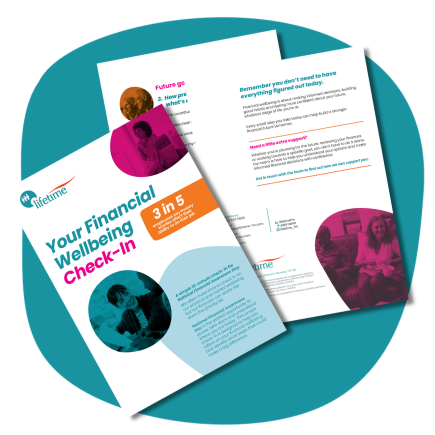
Our financial wellbeing support for employers brings together financial education, webinars, coaching and the Lifetime app, so employees can get help when they need it.
Frequently asked questions
What is the average number of sick days in the UK?
The CIPD found an average of 9.4 days per employee in 2025. The ONS estimates an average of 4.4 days lost per worker across the labour market in 2025; the two are measured differently.
What is the main cause of long-term sickness absence?
Mental ill health, according to the CIPD’s 2025 report.
How much is Statutory Sick Pay?
£123.25 a week or 80% of normal weekly earnings, whichever is lower, for up to 28 weeks, according to GOV.UK.
Can financial wellbeing support reduce absence?
Money worries are one of the non-work factors employers link to stress-related absence. Supporting financial wellbeing is one way to address it, alongside wider health and wellbeing support.
Support your people
Want to see how financial wellbeing support could work for your organisation? Book a demo and explore how simple, effective financial support can make a lasting impact on your team.
This article is general information, not personal financial advice. Lifetime is authorised and regulated by the Financial Conduct Authority (FRN 225795).